

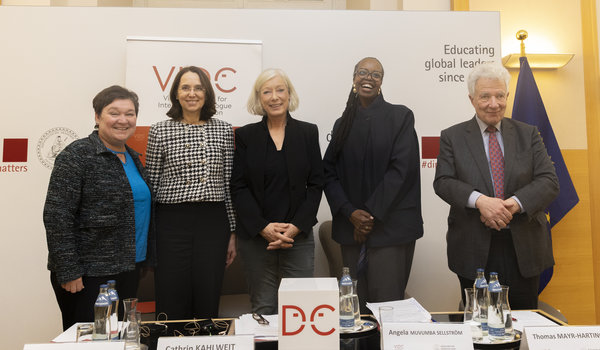
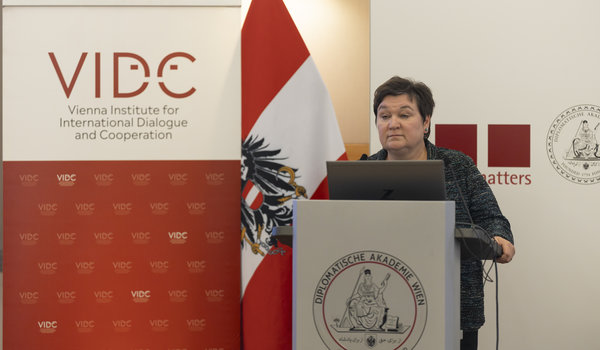
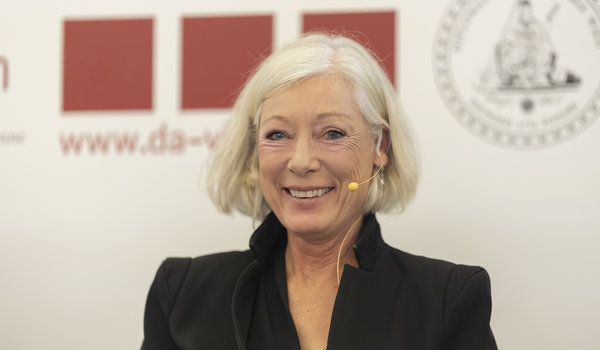
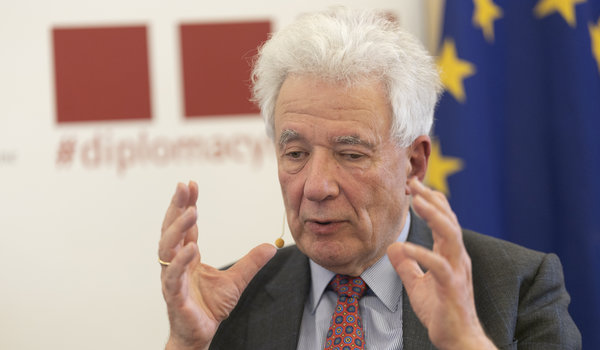
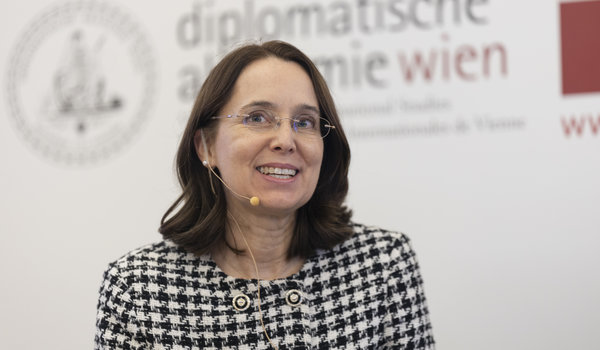
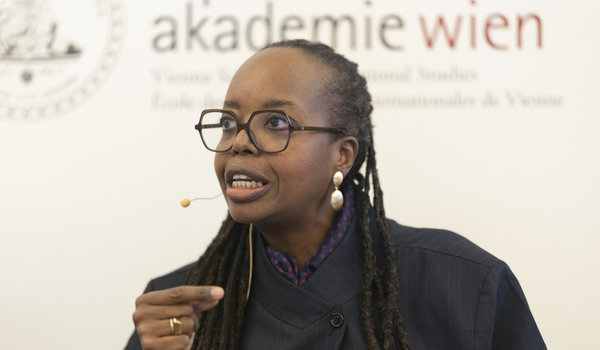
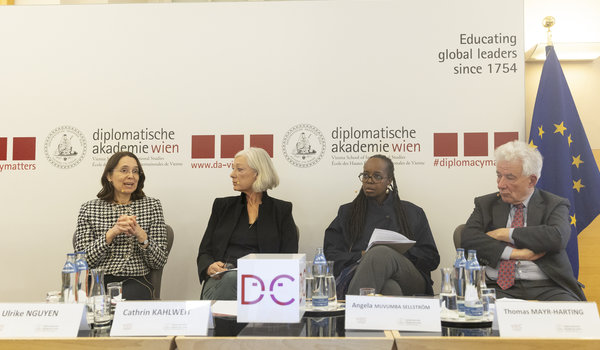
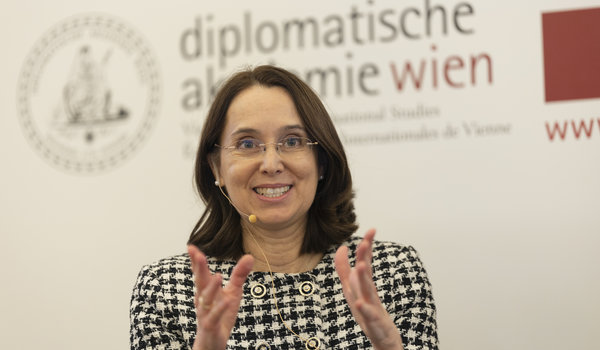
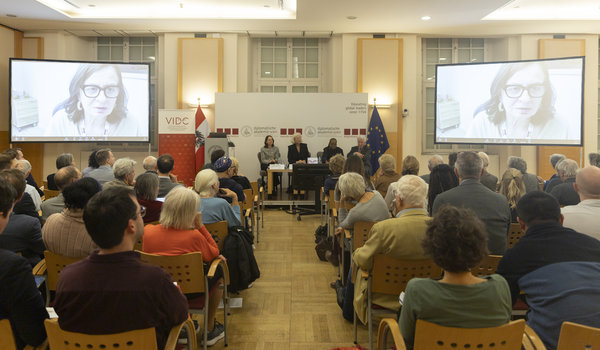
In June 2026, Austria was elected as a non-permanent member to the UN Security Council for a two-year term with 131 votes. On 18 November 2026, the VIDC hosted a panel at the Diplomatic Academy of Vienna to discuss the upcoming membership starting 1 January 2027. Journalist Cathrin Kahlweit moderated the panel, which comprised Ambassador Ulrike Nguyen (Austrian Ministry of Foreign Affairs), Ambassador Thomas Mayr-Harting (European Diplomatic Academy), Angela Muvumba Sellström (Nordic Africa Institute) and Lina Abou-Habib (Asfari-Instituts for Civil Society and Citizenship, American University Beirut).
In her opening remarks, Magda Seewald (VIDC Global Dialogue) illustrated the tensions Austria will be confronted with in its new role: the current number of armed conflicts has not been this high since the Second World War, whilst multilateralism is losing ground and the UN is losing credibility, finding itself in the most profound crisis since its foundation. The Security Council, for example, no longer reflects the current global power balance, which is why criticism from the Global South is growing increasingly loud.
Duties and responsibilities in the Security Council
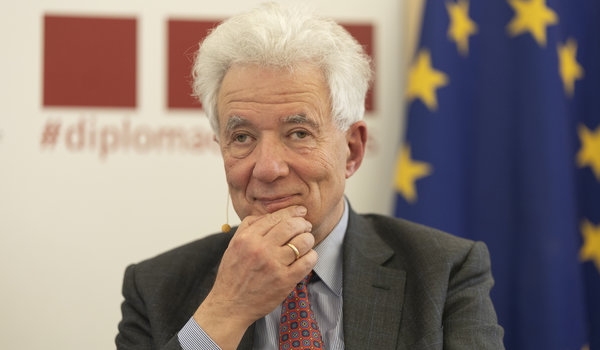
Ambassador Mayr-Harting had previously served as a Permanent Representative to the UN during Austria’s 2009/2010 membership. He emphasised that the current global configuration makes the role of a Council member significantly more challenging. He referred to the difference between the ‘compulsory’ and ‘optional’ elements in competitive gymnastics to highlight that the majority of the work consists of the prescribed, fundamental agenda, whilst only a small part remains for setting one’s more innovative priorities. He noted that it is valuable to develop one’s own profile within the compulsory area. At the time, for example, Austria had focused on the protection of civilians in armed conflicts and had helped drive forward Resolution 1894. Partnerships with Costa Rica and Mexico had also been important in this regard and through this, Austria presented itself as a key voice for human rights and the rule of law. This focus continues to shape perceptions and expectations towards Austria to this day and has also made Austrian foreign policy more global in the long term.
Austria’s priorities and the question of leadership
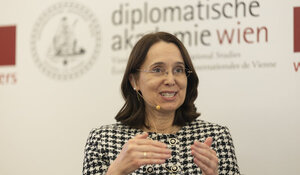
Ambassador Ulrike Nguyen presented the key priorities for the upcoming membership as a continuation of this very profile. The protection of civilians and children in armed conflict remains central. In addition, the Women, Peace and Security agenda, peacekeeping missions and the fight against transnational threats such as terrorism and organized crime form Austria’s core programme. As part of its broader agenda, Austria intends to address new threats, such as the use of AI in weapons and warfare.
Since its last membership, Austria has gained experience and strengthened its role. In line with its agenda priorities, Austria now plans to co-chair informal expert groups in order to convene thematic meetings, draw attention to specific situations, or prepare discussions. Together with Liberia, Austria intends to act as a focal point to the International Criminal Court, take the penholdership for the UN Office for West Africa and the Sahel, and focus on climate, peace and security issues.
Scope for action of elected members
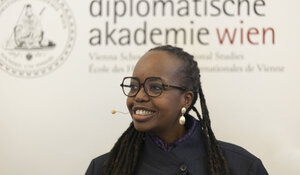
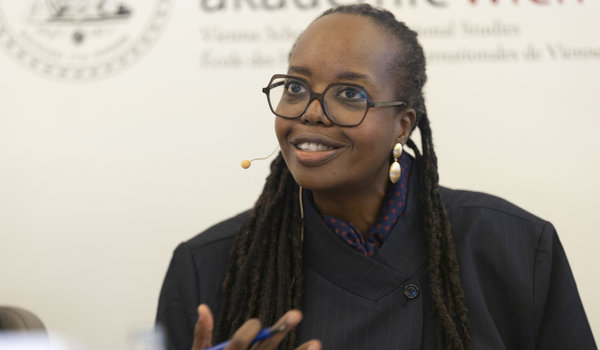
Angela Muvumba Sellström described a Council membership as a major undertaking which simultaneously offers scope for innovation. Elected members gain access to tools such as informal Arria-formula meetings or field missions. However, these must be applied in a manner that also fosters sustainable coalitions and outcomes. She illustrated how this can be achieved using the example of Niger. Niger expanded its team following its membership and specialized in the Sahel. In partnerships, it proposed a resolution on climate and security which, despite the support of many states, failed but brought an important issue to the Council’s attention.
Muvumba Sellström also highlighted asymmetries within the Council. The role of penholdership is dominated by permanent members France, the UK and the US (Permanent 3 – P3), whilst Russia and China convey their positions informally. The latter thus exercise their veto power in the Council behind closed doors. At the same time, it is more challenging for non-permanent members, particularly those from the Global South, to participate in the form of penholdership due to their smaller Permanent Missions. Muvumba Sellström used the example of Kenya and explained how it made its expertise on conflicts in Africa available to the P3 rather than trying to exert influence through an administratively challenging penholdership. Such involvement of African states could strengthen their experience, consolidate their influence and is therefore crucial.
The Global South in the Security Council
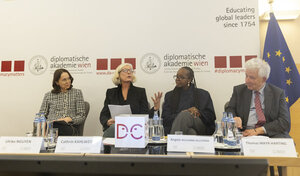
In response to Kahlweit’s question about potential differences between African and European interests within the Council, Muvumba Sellström emphasised that there were no ideological differences. The importance of an effective Security Council is as central for African states as it is for European states, due to a large number of armed conflicts taking place on the African continent. Rather, differences become apparent in the prioritization of specific issues, for example in the degree of interest in strengthening the African Union or regional arrangements under Chapter VIII of the UN Charter are strengthened.
Furthermore, Kahlweit pointed out that some conflicts in the Global South, for example in Gaza, Sudan or the Democratic Republic of Congo, had already been on the agenda during Austria’s 2009/2010 membership, yet they remain unsolved. Ambassador Mayr-Harting then highlighted a structural deadlock mechanism. Any conflict in which a permanent Council member has a stake is, in effect, unsolvable within the Security Council, as these members can block any decision using their veto. The Council is therefore primarily able to act on issues where the permanent members do not have any strong interests. This explains why conflicts in Africa account for such a large proportion of the Council’s work. At the same time, the UN is a central platform to the Global South, as it is able to attract international attention to issues otherwise invisible. However, in crises where permanent members have strong interests, the Council’s scope for action is significantly limited to specific areas such as humanitarian issues.
Feminist and decolonial perspectives
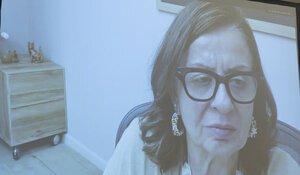
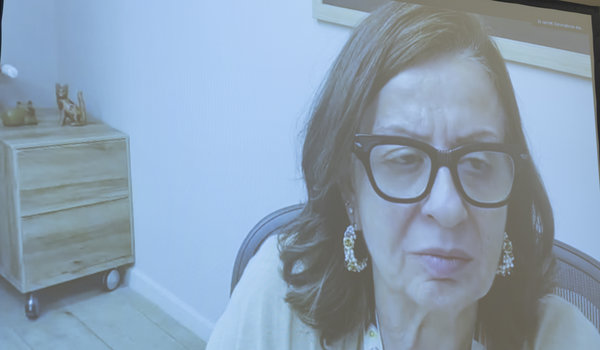
Lina Abou-Habib contributed a feminist perspective from the WANA region (West Asia – North Africa), which faces challenges posed by endemic conflict and displacement, as well as shrinking spaces for civil society. Echoing Seewald’s introductory remarks, she too spoke of an erosion of the rules-based world order. Whilst multilateralism has its weaknesses, in times of rising far-right forces, she argued, one must hold on to what is available and consider how it can be improved. In this context, membership of the Security Council is a democratic tool and key means of exerting influence. Simultaneously, however, membership also entails the responsibility to oppose those positions profiting from wars.
However, the success of exerting influence depends on credibility and requires coherence between domestic and foreign policy positions. Whilst the principles of Austria’s Africa Strategy, which encompasses peace, security, economic development and human rights, are sound, they cannot coexist with agreements under which refugees are sent to third countries to process their asylum applications. Abou-Habib emphasised that human rights must not be applied selectively. Austria should therefore build alliances with feminist actors in conflict regions in order to implement its agenda achieving sustainable, feminist peace.
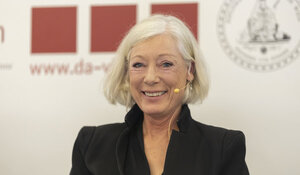
Kahlweit raised another key point and asked Abou-Habib to what extent colonial language remains embedded in the agendas of Western states with regard to the Global South. Abou-Habib responded by emphasizing that colonial legacies are internalized on all levels and inscribed in all positions. She argued that a conscious process of coming to terms with this legacy is required, and that this must include the question of reparations. However, she also highlighted that it is not merely a question of legacy but we are also dealing with contemporary colonialism. Decolonisation means distinguishing between different perspectives and asking whose peace counts, whose peace is not addressed, and what security means for different actors. She emphasised that it is also important not to consider conflicts in isolation, but to understand how they affect all of us. It is therefore in our common interest to put an end to militarisation.
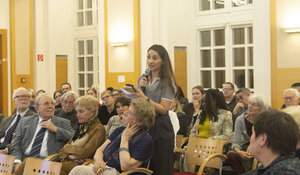
In the concluding discussion with the audience, further conflicts and crises were addressed, particularly those in Afghanistan, Ethiopia and Palestine. Ambassador Nguyen emphasised that Austria’s neutrality makes it a trustworthy partner without a hidden agenda for many states in the Global South. When asked whether the UN had failed in its mission, Muvumba Sellström replied that it was the only platform where all members came together and therefore needed to be strengthened rather than abandoned. All in all, the panel demonstrated that Austria’s scope for action in the Security Council will be a challenging task, but it is by no means insignificant. Its credibility and success, however, are closely linked to whether it embodies the values it represents in the Council on all levels.