


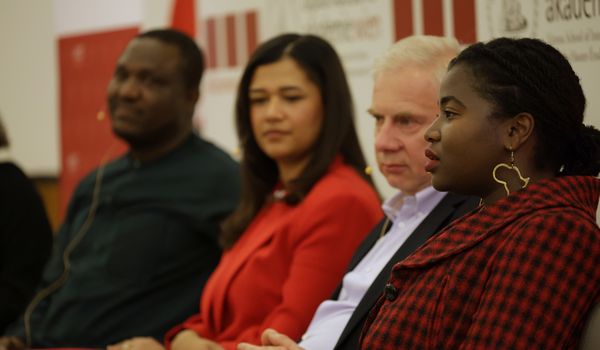
How can the Africa Strategy contribute to “The Right Not to Have to Leave”?
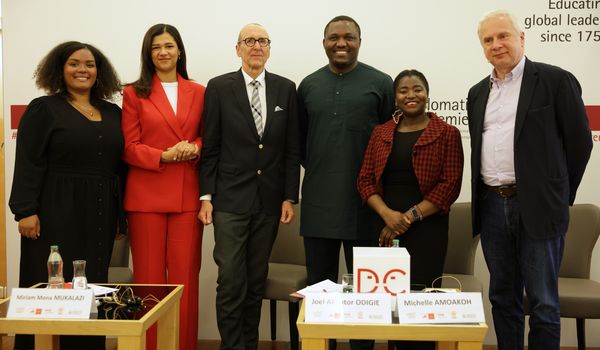
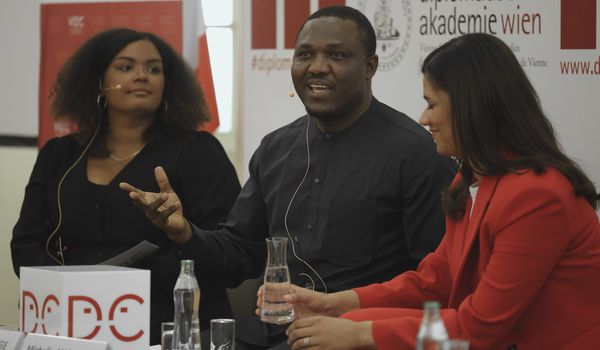
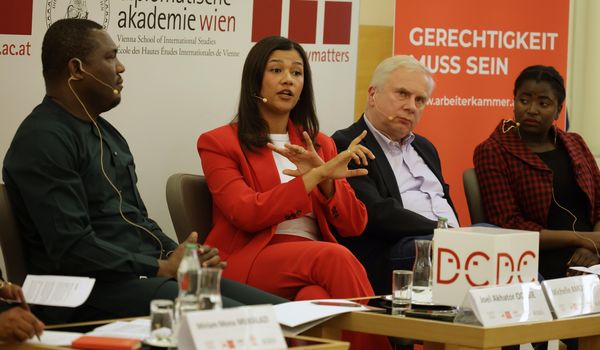
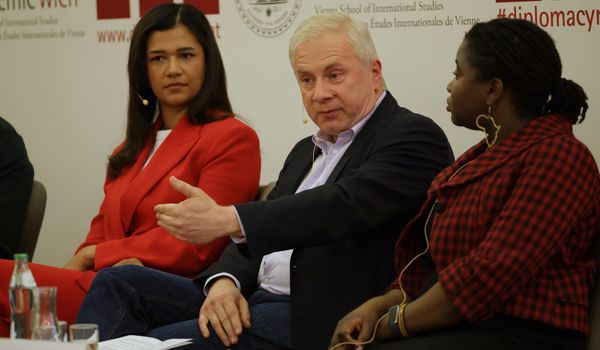
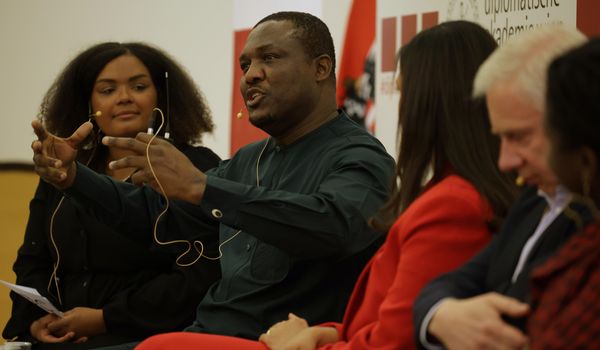
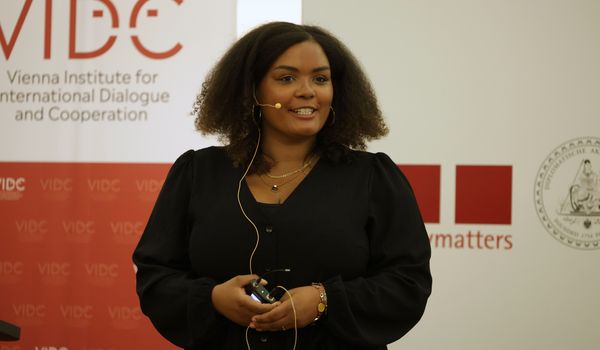
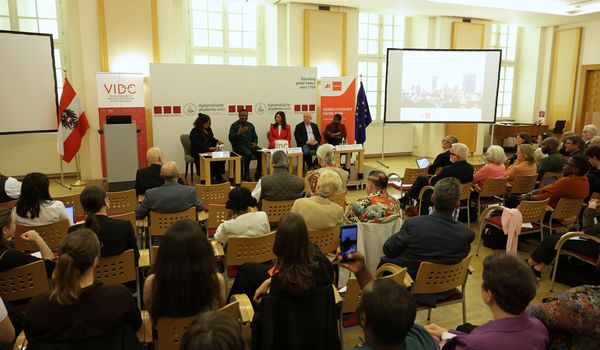
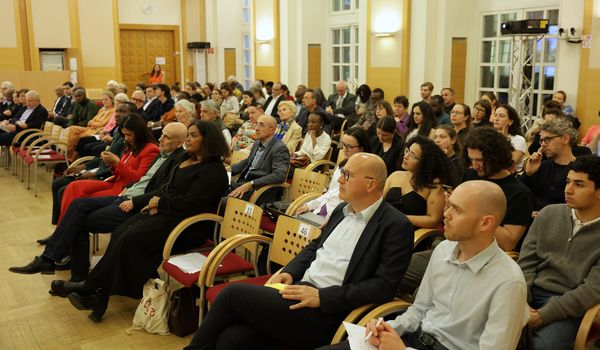
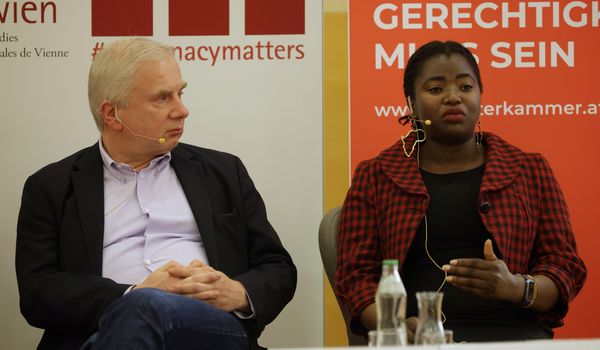
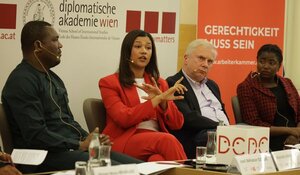
The panel discussion ‘Creating Fair Economic Partnerships – A Focus on Austria’s Africa Strategy’ took place on May 7, 2026, at the Diplomatic Academy Vienna. Organized by the Vienna Chamber of Labor (AK Wien), the Austrian Trade Union Federation (ÖGB), and the Vienna Institute for International Dialogue and Cooperation (VIDC), the event brought together representatives from government, academia, trade unions, diaspora business organizations, and development cooperation to discuss the planned Strategy and the future of Africa–Europe cooperation. The discussion was moderated by Miriam Mona Mukalazi (VIDC Global Dialogue), who framed the event as part of an ongoing debate about “what is already working well” and where Austria’s Africa Strategy still faces unresolved tensions.
“A Radical New Beginning”
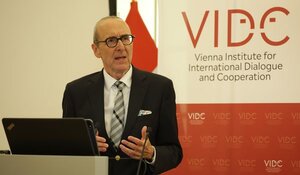
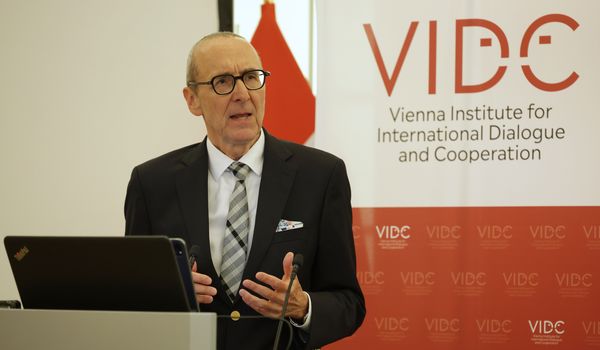
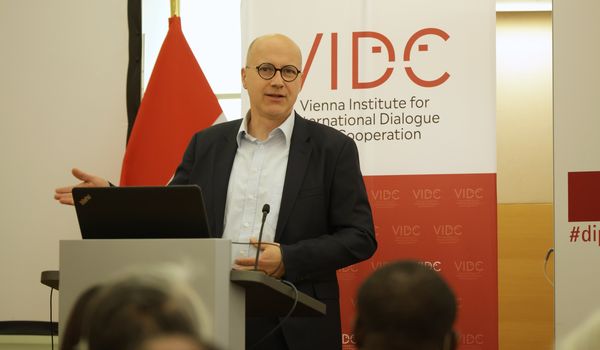
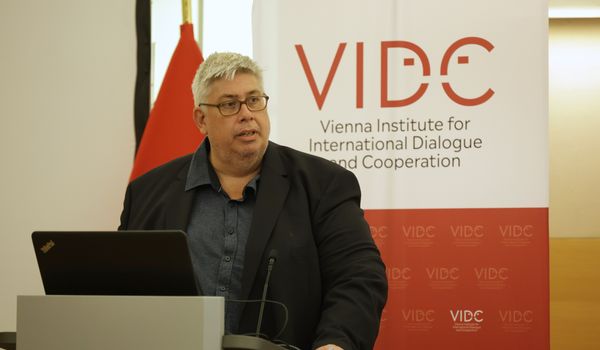
In their opening remarks, Valentin Wedl (Vienna Chamber of Labor) and Marcus Strohmeier (Austrian Trade Union Federation) argued that Austria’s relationship with Africa must move beyond viewing the continent primarily as a source of raw materials and a market for European exports. Both emphasized the importance of fair economic cooperation, vocational training, taxation, social protection, labor rights, and creating living conditions that reduce forced migration.
Presenting the Austrian Foreign Ministry’s perspective, Stefan Scholz characterized the planned Africa Strategy as a “radical new beginning” and stated that “Austria’s new approach to Africa shifts from a traditional donor-recipient model to a mutually beneficial partnership.” He stressed that the strategy was being developed through broad consultation and aligned with the African Union’s Agenda 2063, while adding peace and security, trade and investment, and renewable energy partnerships to the key priorities already mentioned by Wedl and Strohmeier. Referring to the Foreign Ministry’s consultations with African governments and stakeholders, Scholz stressed that “the key now is to bundle all these capacities into one coherent whole-of-society Africa strategy.”
Challenging the Unequal Exchange
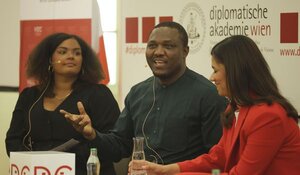
Joel Akhator Odigie strongly challenged aid-centered and market-driven narratives. “Development assistance is not what we are doing. It’s not charity,” he stated, arguing instead for partnerships that address structural inequalities and support African industrialization. Referring to the African Mining Vision, he stressed that African countries do not simply want to export raw materials but build domestic industries and retain more value locally, warning against reproducing colonial structures under new labels.
Expanding on this critique, Odigie argued that development strategies must benefit the broader population rather than only elites and criticized economic models that place “profit before people.” Poverty and exclusion, he added, fuel insecurity and recruitment into extremist groups, making human security and socioeconomic well-being central to any serious partnership.
Adapting Tax Regimes and Business Models
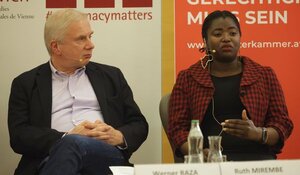
Ruth Mirembe approached the discussion from a tax justice perspective. She argued that “fairness” is difficult to define within tax law, but stressed that, from an African perspective, fair taxation means that taxing rights should remain with the countries where profits and income are generated. Referring to Austria’s tax agreements with African states, she criticized existing arrangements in which taxing rights over interest and royalty income often remain with wealthier “resident states” rather than source countries in Africa. At the same time, she emphasized that African countries cannot be treated as a single market and that business models need to be adapted to local realities and demand structures rather than simply transferred from Europe.
Building on the issue of taxation, Odigie criticized that, so far, multinational companies have often used tax havens and other practices that prevent African states from financing education, healthcare, and social protection systems while reinforcing structural socioeconomic inequalities.
Diaspora Entrepreneurs and Alternative Financial Flows
Michelle Amoakoh highlighted the growing role of diaspora entrepreneurs and investors in cross-border cooperation. She described diaspora actors as “bridge builders” and “trust brokers” capable of connecting European and African business ecosystems. Examples ranged from remittance-based health care solutions to sustainable consumer products and cooperations of small and medium-sized enterprises (SMEs).
Amoakoh also stressed the broader economic importance of remittances, which now exceed official development assistance flows to Sub-Saharan Africa. Rather than replacing public development financing, however, she argued that these financial flows should be complemented through mechanisms such as diaspora investment structures, matching grants, and SME financing.
Barriers to Trade and Mobility
Werner Raza focused on the links between trade and migration. He rejected attempts to frame the Africa Strategy mainly through migration control, noting that migration from African countries to Austria remains comparatively low. Instead, he argued that mobility should be discussed in terms of educational exchange, vocational training, and business travel.
Referring to failed EU negotiations with Tunisia, Raza noted that more liberal visa systems for African professionals remain “politically a non-starter” in Europe, despite their importance for service-based cooperation. He also stressed that African exporters continue to face major barriers when entering European markets due to technical and regulatory standards. Europe, he argued, must not only focus on exporting to Africa but also facilitate African exports to Europe.
Underlying Concerns
China’s role in Africa surfaced repeatedly throughout the event. Odigie criticized what he described as the EU’s shift toward a “copycat-like Chinese model” under initiatives such as the Global Gateway. He warned that these projects risk reproducing similarly extractive dynamics if they prioritize resource access and private investment over structural transformation and public welfare. Several speakers nevertheless acknowledged that Africa’s engagement with China also reflected the continent’s ability to diversify partnerships in a multipolar world.
These debates repeatedly intersected with broader questions of colonial continuities and historical responsibility. Referring to Austria’s abstention in a recent UN vote recognizing the transatlantic slave trade as a crime against humanity, one audience member questioned how genuine partnership could be built without acknowledging Europe’s historical role in shaping structural inequalities. Throughout the discussion, concerns about the potential reproduction of colonial and extractive relationships remained a recurring point of tension.
Key Demands
Together, the speakers and audience members articulated a number of demands and unresolved questions regarding the future direction of Austria–Africa relations:
• partnerships “on equal footing” rather than extractive economic relations
• stronger labor rights, taxation, and social protection systems
• industrialization and local value creation instead of raw material dependency
• fairer access to European markets and more mobility opportunities
• meaningful inclusion of African civil society and diaspora organizations
• development models focused on public welfare rather than “profit before people”
• long-term accountability and measurable implementation of the Africa Strategy