

Background
Negotiations on a UN Framework Convention on International Tax Cooperation have entered a decisive phase in 2026. They offer not only an opportunity to adapt the international tax architecture to the realities of the 21st century, but also to make it more inclusive. This, in turn, can strengthen the mobilisation of domestic resources in countries of the Global South. In times of debt crises and declining official development assistance (ODA), these resources are particularly relevant to generate income and combat poverty and inequalities. Those objectives are central concerns, also in the light of Austria’s future Africa Strategy.
Austria co-sponsored the final declaration of the 4th International Conference on Financing for Development in 2025. In the “Sevilla Commitment”, states committed to “continue to engage constructively in the negotiations” on the UN Convention and to “encourage support for the process.” The question arises as to how this support will be structured in concrete terms – particularly against the backdrop of current budgetary constraints and the associated decline in bilateral and multilateral development and climate finance.
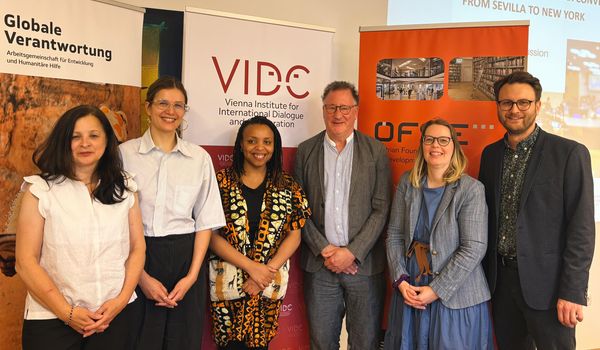
The Roundtable was held under the Chatham House Rule to facilitate an open exchange of views. It offered an overview of status and content of the UN Framework Convention on International Tax Cooperation and the significance of the negotiations for African countries. It also explored the question of how Austria can play an active and coherent role in the negotiations, thereby creating a win-win situation for countries of the Global South as well as for EU Member States, particularly Austria.
More details can be found in our report.
Experts
Everlyn Muendo
Tax Justice Network Africa
Giulia Varaschin
EU Tax Observatory
Richard Stern
WU Global Tax Policy Center
Moderation: Lukas Schlögl
Austrian Foundation for Development Research (ÖFSE)