

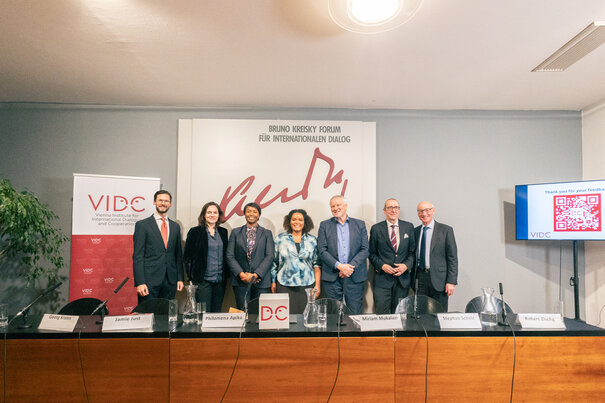
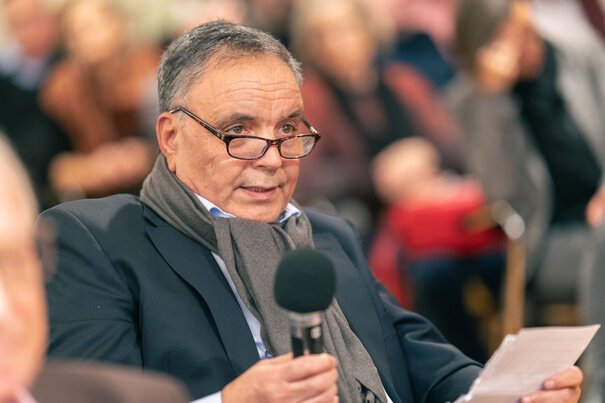
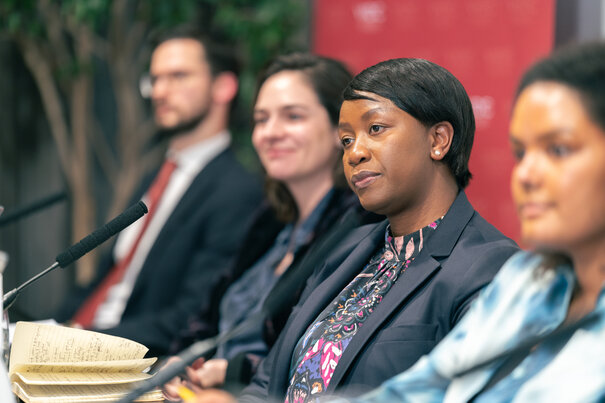
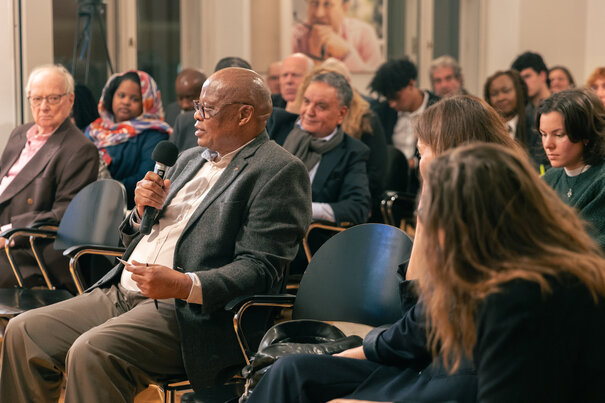
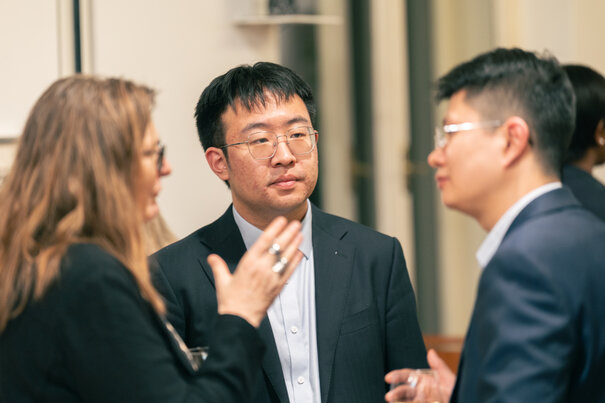
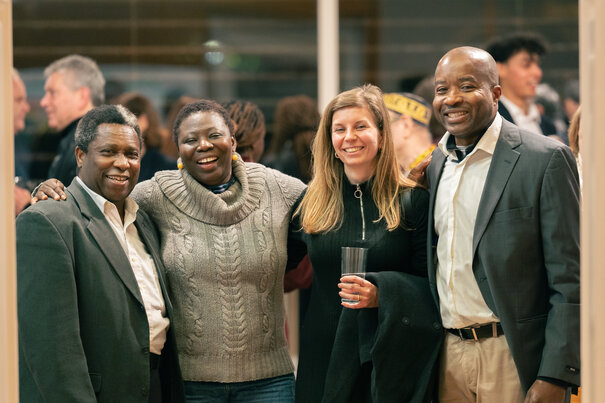
On 9 December 2025, the VIDC, in cooperation with the Bruno Kreisky Forum for International Dialogue,organised a panel discussion at 7 p.m. on ‘25 Years of the AU-EU Partnership: Between Shared Values and Shifting Realities’. The event aimed to analyse the most important achievements, potential and challenges of the current partnership between the AU and the EU, discuss the key outcomes of the Luanda Summit from different perspectives, and examine how the priorities and modalities of the upcoming Austrian Africa Strategy could contribute to strengthening a renewed partnership between equals.
Keynote
- Geert Laporte, Senior Associate of ECDPM
Panel
- Robert Zischg, Head of Department for Sub-Sahara Africa and the African Union, Austrian Federal Ministry for European and Internationals Affairs
- Stefan Scholz, design. Head of Department for Sub-Sahara Africa and the African Union, Austrian Federal Ministry for European and International Affairs
- Philomena Apiko, European Centre for Development Policy Management
- Jamie Just, African European Civil Society Engagement Platform (CSEP/Concord)
- Georg Krenn, Austrian Chamber of Commerce in Cairo
Moderator: Miriam Mona Mukalazi, Africa Policy Programme at the VIDC
Partnership between Africa and Europe
Twenty-five years have passed since the EU-Africa Partnership was established at the first summit in Cairo, and since the adoption of the historic Joint Africa-Europe Strategy in Lisbon in 2007, the preamble of which states: "Africa and Europe are linked by history, culture, geography and a shared future, as well as by a community of values: respect for human rights, freedom, equality, solidarity, justice, the rule of law and democracy." Since then, the partnership has faced many tensions due to differing priorities on issues such as migration policy, vaccine distribution and other topics. According to EU President Antonio Costa, the aim of the 7th AU-EU Summit, which will take place in Luanda on 24 and 25 November, is ‘to strengthen cooperation in key areas such as economic integration, trade and investment, green transition, digitalisation, migration, peace and security, multilateralism and human development’. Austrian Foreign Minister Meinl-Reisinger also emphasises that Africa is a continent of opportunity, characterised by enormous economic potential and a dynamic young population, and that the new Austrian Africa Strategy, recently announced by the Austrian government, will pursue similar priorities.