


(17 December 2025) This article examines one of the most active forms of emergency aid: the Afghan diaspora-led mobilization, whose role in humanitarian relief has expanded significantly since the Taliban’s return to power in August 2021. It highlights two recent earthquakes in Herat (2023) and Kunar (2025) to demonstrate how Afghan diaspora networks mobilize rapidly by coordinating fundraising, leveraging digital platforms and partnering with local actors to deliver emergency assistance.
Diaspora Humanitarianism
By 2022, nearly one in twenty-nine individuals - approximately 30 percent of the world’s population - required humanitarian assistance. This staggering figure, driven by overlapping crises, such as pandemics, armed conflicts, and climate change, reflects a world in which traditional humanitarian systems are overstretched. In addition to more resources, meeting these challenges requires more inclusive and adaptable forms of humanitarian response. One such approach is diaspora humanitarianism. Around the world, diaspora communities motivated by deep personal ties and a strong sense of responsibility toward their countries of origin have stepped up as alternative crisis response actors. The efforts of these communities are characterized by their speed, flexibility, and cultural and linguistic familiarity. Operating largely outside formal humanitarian structures, diaspora groups are capable of reaching remote or high-risk areas, mobilizing funds quickly, and maintaining long-term support not bound by institutional mandates.
Afghanistan’s Deepening Humanitarian Crisis
As 2025 draws to a close, Afghanistan’s humanitarian crisis continues to intensify. International aid has been reduced significantly, and critical services are collapsing, leaving many without shelter, protection, or healthcare. The humanitarian crisis in Afghanistan is rooted in decades of armed conflict, forced displacement, and recurrent natural disasters compounded by international sanctions on the Taliban-controlled state. The country’s Humanitarian Needs and Response Plan remains severely underfunded. According to the United Nations Office for the Coordination of Humanitarian Affairs (OCHA), more than half of Afghanistan’s population requires humanitarian assistance to survive. Millions of women, children, displaced families, and returnees have been left without access to food, healthcare, or protection.
According to the International Organizations for Migration, the forced return of 1.5 million Afghans from Iran and Pakistan in 2025 has put additional pressure on the government and social services. Meanwhile, the Taliban’s restrictions on women, including bans on education beyond sixth grade, formal employment, and participation in public life, have further eroded the social foundations of communities already facing extreme vulnerability.Despite the immense needs, humanitarian operations in Afghanistan are severely underfunded, and the situation has been worsened by major reductions in international aid. For example, United States Agency for International Development previously provided approximately 35 percent of Afghanistan’s total Official Development Assistance but has scaled back its support significantly. Other organizations have faced cuts of up to 40 percent, which further limits their ability to deliver life-saving assistance. In response to this widening gap, the Afghan diaspora has stepped in as a vital actor by mobilizing resources, volunteering time, delivering relief, sharing skills and materials, and advocating for assistance. With an estimated 7.5 million Afghans living outside the country, the Afghan diaspora is among the largest in the world. In Europe, Germany hosts around 442,000 Afghans, while Austria, as of 2024, is home to over 50,000 Afghan nationals.
Diaspora Response to Recent Earthquakes
In recent years, the Afghan diaspora has become a critical lifeline for communities inside Afghanistan, not only through remittances but also by filling the widening gap left by declining humanitarian aid. As international funding has contracted and operational constraints have increased under the Taliban rule, diaspora actors have stepped in to sustain essential forms of support. A recent Samuel Hall study identified 200 Afghan diaspora organizations – ranging from structured associations to informal volunteer networks - many of which played an active role in responding to the 2023 Herat earthquakes. Their efforts included rapid fundraising campaigns, direct resource mobilization for affected areas, and the use of digital platforms to coordinate volunteers across Europe, North America, and Australia. Prominent public figures, including musicians and cricket stars leveraged their visibility to amplify appeals and channel donations.
These patterns illustrate how diaspora-led initiatives now constitute an indispensable part of Afghanistan’s emergency response landscape. Their flexibility, community-driven legitimacy, and ability to bypass political prominence allow them to mobilize faster than many institutional actors. At the same time, their growing prominence highlights a structural shift: as formal humanitarian channels shrink, diaspora networks increasingly shoulder responsibilities once managed by states and international organizations. Diaspora-led emergency mobilization has become one of the most reliable and immediate sources of crisis response in Afghanistan’s recent disasters. When formal humanitarian aid is slow, constrained, or underfunded, diaspora networks frequently step in to fill the gap.
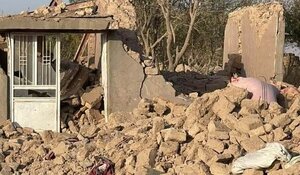
In October 2023, a series of 6.3-magnitude earthquakes struck Herat Province, killing nearly 1,400 people, injuring over 1,800, and displacing more than 100,000. The Afghan diaspora mobilized rapidly and raised an estimated $3.4 million to meet immediate needs, $2.8 million of which was contributed within the first week. In August 2025, a powerful earthquake hit Nangarhar and Kunar provinces, killing more than 2,000 people and destroying homes and essential infrastructure. No comprehensive study has yet mapped diaspora responses, but according to journalist and activist Wali Malikzai, Afghan communities in California comprised of mosque networks and cultural and professional associations raised close to $2 million. Approximately $500,000 was dispatched immediately for emergency relief, with the remainder allocated to long-term recovery. Diaspora groups relied on trusted local partners to assess needs and ensure transparency, demonstrating once again how diaspora networks function as fast, flexible, and high-trust responders in moments when formal humanitarian channels are slow or absent.
Afghan Diaspora in Austria: A Closer Look
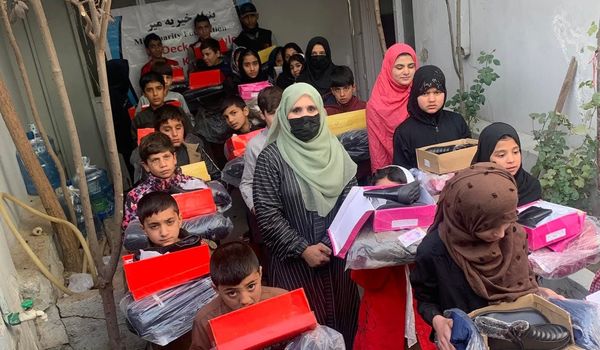
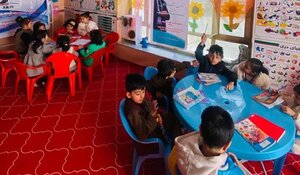
In response to both Herat and Kunar earthquakes, segments of the Afghan diaspora located in Austria mobilized quickly and focused primarily on cash transfers and direct assistance. The Afghan Cultural Association (AKIS) is one of Austria’s most active diaspora organizations and serves as a humanitarian bridge between Afghans in Austria and crisis-affected communities at home. AKIS leverages personal networks, long-standing local contacts, and volunteer coordination to deliver assistance following floods, earthquakes, and other emergencies. In areas where AKIS lacks formal representation, such as Kunar, cash is sent through trusted money providers (hawaladars) or delivered by diaspora volunteers traveling from Vienna. The Marefat Association has also played a role in emergency relief by offering support after the Herat earthquake, distributing winter supplies, and providing educational packages for schoolchildren. Like AKIS, Marefat works through volunteer representatives in Afghanistan to ensure that aid reaches vulnerable households.
In addition to these two organizations, a Vienna-based religious community held a WhatsApp fundraiser that raised nearly $20,000 to support the crisis response to the Kunar earthquake, and then channeled funds through a reliable local partner via the informal money transfer system (hawala). Beyond emergency response, AKIS supports long-term social needs, including funding teacher salaries at three Kabul schools and providing food and winter clothing for vulnerable children, particularly those working on the streets. These examples reflect a broader trend toward relying on the flexible, community-funded, and trust-based assistance provided by diaspora humanitarianism. While the financial contributions are modest, often sourced from personal networks, grassroots philanthropy, and small-scale appeals, the impact they have on communities with limited access to institutional aid is significant. Both cases illustrate that diaspora organizations can complement the broader humanitarian system by offering the localized access and agility that formal actors often lack.